

The Greatest Fairy-Story Ever
Tolkien on the Mythic Joy of the Resurrection of Jesus

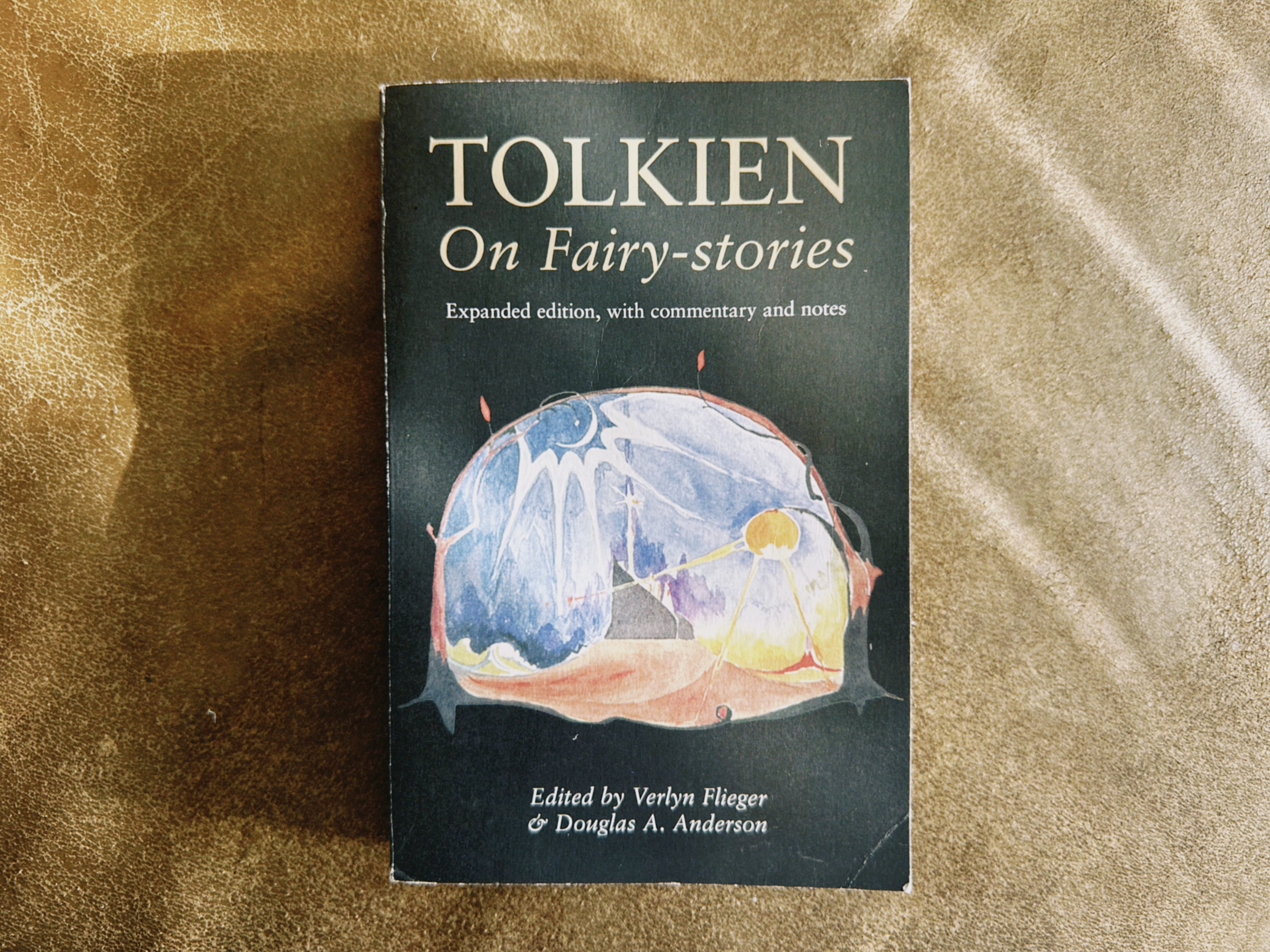
For those unfamiliar, in 1939 Tolkien delivered a lecture exploring the essence and nature of fairy-stories. It ranges widely — considering who they are for, what they are made of, and the kind of power they carry. He closes with a striking turn: a reflection on the Gospel of Jesus Christ and its deep resonance with fairy-stories, a reflection where Christian hope and mythic imagination meet and illuminate one another. So much of my heart, imagination and worldview is captured within these words. I’ve gathered a few of my favorite paragraphs below for you to sit with and reflect on.
I would venture to say that approaching the Christian Story from this direction, it has long been my feeling (a joyous feeling) that God redeemed the corrupt making-creatures, men, in a way fitting to this aspect, as to others, of their strange nature. The Gospels contain a fairy-story, or a story of a larger kind which embraces all the essence of fairy-stories. They contain many marvels—peculiarly artistic, beautiful, and moving: “mythical” in their perfect, self-contained significance; and among the marvels is the greatest and most complete conceivable Eucatastrophe. But this story has entered History and the primary world; the desire and aspiration of sub-creation has been raised to the fulfillment of Creation. The Birth of Christ is the Eucatastrophe of Man’s history. The Resurrection is the Eucatastrophe of the story of the Incarnation. This story begins and ends in joy. It has pre-eminently the “inner consistency of reality.” There is no tale ever told that men would rather find was true, and none which so many sceptical men have accepted as true on its own merits. For the Art of it has the supremely convincing tone of Primary Art, that is, of Creation. To reject it leads either to sadness or to wrath.
It is not difficult to imagine the peculiar excitement and joy that one would feel, if any specially beautiful fairy-story were found to be “primarily” true, its narrative to be history, without thereby necessarily losing the mythical or allegorical significance that it had possessed. It is not difficult, for one is not called upon to try and conceive anything of a quality unknown. The joy would have exactly the same quality, if not the same degree, as the joy which the “turn” in a fairy-story gives: such joy has the very taste of primary truth. (Otherwise its name would not be joy.) It looks forward (or backward: the direction in this regard is unimportant) to the Great Eucatastrophe. The Christian joy, the Gloria, is of the same kind; but it is preeminently (infinitely, if our capacity were not finite) high and joyous. But this story is supreme; and it is true. Art has been verified. God is the Lord, of angels, and of men—and of elves. Legend and History have met and fused.
— Tolkien, On Fairy-stories (Epilogue)
I love that essay—thank you for the reminder!
Tolkien is so much more than a "mere" fantasy writer. Thank you for reminding us.